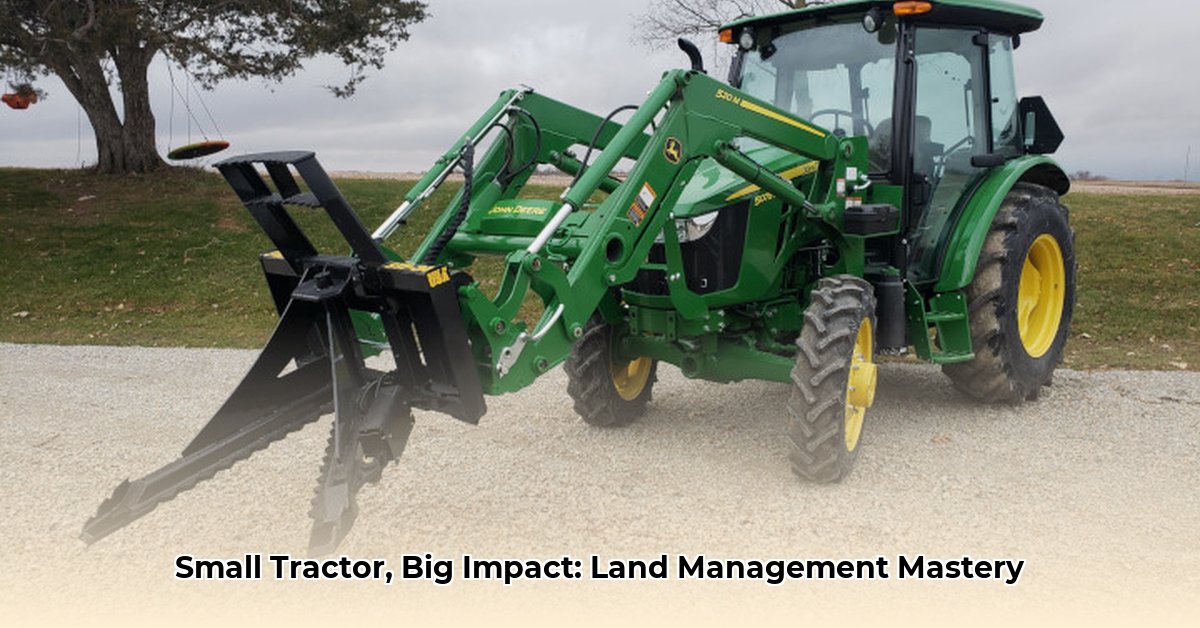
Sustainable agriculture demands efficient and environmentally friendly practices. Removing unwanted small trees is a common task, and choosing the right tool significantly impacts soil health and overall productivity. This guide provides a comprehensive, step-by-step approach to using a small tree puller for your tractor, maximizing its benefits within a sustainable land management strategy. For more tractor attachments, see this helpful resource.
Tool Overview: Understanding Your Small Tree Puller
The small tree puller, typically attached to a tractor's three-point hitch (a common tractor attachment system), offers a precise and efficient method for removing small trees and saplings. Unlike larger equipment, it minimizes soil compaction, preserving soil structure and encouraging healthy root development. This is particularly beneficial for sustainable farming practices.
Components: A typical small tree puller comprises a robust frame, hydraulic or PTO-driven grapple (a claw-like mechanism), and a hitch system for attachment to the tractor. Specifications vary depending on the manufacturer and model; always consult the owner's manual for precise details.
Specifications: Key specifications to consider include pulling capacity (the maximum weight of tree it can remove), hitch type (most commonly a Category 1 or 2 three-point hitch), and compatible tractor horsepower. Ensure compatibility with your tractor before purchasing.
Compatibility: Check the puller's specifications to ensure compatibility with your tractor's power and hitch type. Improper matching can lead to inefficient operation or damage. Pictures and diagrams in the owner's manual will guide you.
Operational Procedures: Safe and Effective Tree Removal
Safe and efficient operation involves careful preparation and adherence to a methodical process. Remember, safety should always be your priority.
Step 1: Site Assessment and Preparation: Before starting, thoroughly inspect the area surrounding the target tree for obstacles like rocks, buried utilities, or other vegetation. Clear a safe working space to prevent accidents. "A well-planned operation reduces risk and boosts efficiency," advises Dr. Emily Carter, Agricultural Engineer at the University of California, Davis.
Step 2: Secure Attachment: Connect the puller to your tractor's three-point hitch, following the manufacturer's instructions precisely. Double-check all connections to ensure stability and prevent accidental detachment during operation.
Step 3: Grapple Positioning: Position the grapple around the tree trunk, as close to the base as possible. Firmly grasp the tree before engaging the hydraulics or PTO. Ensuring a strong grip minimizes slippage and maximizes pulling efficiency.
Step 4: Gradual Extraction: Slowly engage the hydraulics or PTO, gradually increasing pressure. Monitor the tree's movement and readily readjust the grapple if necessary. Avoid sudden movements to prevent damage to the puller or surrounding areas.
Step 5: Safe Detachment: Once the tree is removed, carefully disconnect the puller. Do not force detachment; investigate and rectify any obstructions before attempting again.
Maintenance: Prolonging the Life of Your Tree Puller
Regular maintenance ensures optimal performance and extends the life of your investment.
- Post-Operation Cleaning: After each use, clean the puller thoroughly, removing mud, debris, and any vegetation. This prevents corrosion and ensures smooth operation.
- Lubrication: Regularly lubricate all moving parts according to the manufacturer's recommendations. Proper lubrication reduces friction, minimizing wear and tear.
- Component Inspection: Inspect all components for wear or damage. Replace worn or damaged parts promptly to prevent further issues and maintain operational safety.
- Storage: Store the puller in a dry, clean location, protecting it from the elements. Proper storage prevents rust and extends its lifespan.
Comparison with Alternative Methods: Sustainable Choices
Several methods exist for removing small trees. The optimal choice depends on factors like the scale of work, budget, and environmental impact considerations.
| Method | Soil Impact | Efficiency | Cost | Environmental Impact |
|---|---|---|---|---|
| Small Tree Puller | Low | Moderate | Moderate | Low |
| Manual Removal | Moderate | Low | Low | Low |
| Larger Equipment (e.g., Excavator) | High | High | High | High |
The small tree puller offers a balance between efficiency and minimal soil disturbance, making it ideal for sustainable practices. Manual removal is labor-intensive but cost-effective for small-scale projects. Larger equipment is efficient for large-scale clearing but significantly impacts soil health.
Troubleshooting: Addressing Common Problems
- Grapple Failure to Grip: Check grapple condition, proper positioning, and adequate hydraulic pressure.
- Slow Extraction: Assess tree size, grapple positioning, and potential obstructions.
- Hydraulic Leaks: Inspect hoses and fittings for damage; repair or replace as needed.
Consult your owner’s manual for detailed troubleshooting guides specific to your model.
Conclusion: Empowering Sustainable Land Management
The small tree puller offers a powerful yet precise tool for sustainable land management. Its efficient operation and minimal soil disturbance make it a valuable asset for small-scale farmers and land managers committed to environmentally conscious practices. By following this guide and prioritizing safe operation and regular maintenance, you can effectively utilize this tool, contributing to a more sustainable and productive agricultural future. For more information on sustainable farming practices, visit [link to a reputable resource on sustainable agriculture].